
![A 12 oz bag of Kochere Coffee Ethiopian Harrar Natural Medium Roast by Kochere Coffee Company stands upright, surrounded by coffee beans, strawberries, chocolate pieces, and a jar of chocolate spread.[12 oz][Whole Bean]](http://kochere.com/cdn/shop/files/Ethiopian_Harrar_12oz_webp.webp?v=1782139990&width=300)
![Bag of Kochere Single Origin Colombian medium roast coffee, displayed with rich chocolate, fresh oranges, and sweet mixed berries to represent its vibrant flavor profile. [12 oz][Whole Bean]](http://kochere.com/cdn/shop/files/Colombian_12oz_webp.webp?v=1782139455&width=300)
![Kochere Horn of Africa Reserve medium-dark roast coffee, displayed with fresh lemons, berries, and white blossoms to represent its flavor profile. [12 oz][whole bean]](http://kochere.com/cdn/shop/files/Horn_of_Africa_12oz_webp.webp?v=1782139899&width=300)
![Bag of Kochere Single Origin Tanzanian medium-light roast coffee, displayed with fresh pears, sweet strawberries, and white blossoms to represent its crisp and aromatic flavor profile. [12 oz][Whole Bean]](http://kochere.com/cdn/shop/files/Tanzanian_12oz_webp.webp?v=1782140165&width=300)
![Bag of Kochere Single Origin Brazilian medium roast coffee, displayed with raw almonds, fresh lemongrass, and dark chocolate to represent its balanced, aromatic flavor profile. [12 oz][Whole Bean]](http://kochere.com/cdn/shop/files/Brazilian_12oz_webp.webp?v=1782139535&width=300)
The four great Central and South American coffee regions — Colombia, Costa Rica, Honduras, and Brazil — each stamp a distinct personality on the cup: Colombia is balanced, Costa Rica is bright, Honduras is sweet and spicy, and Brazil is smooth and chocolatey.
The Bottom Line
Colombia, Costa Rica, Honduras, and Brazil sit in the heart of the coffee belt, and altitude, volcanic soil, climate, and processing shape four different flavor "personalities." Match the origin to your taste: pick Colombian Medellín for balance, Costa Rican Alajuela for brightness, Honduran Marcala for cozy sweetness, and Brazilian Santos for low-acid cocoa. Reading origin, altitude, and processing on the label is the fastest way to choose a single-origin that fits your palate.
Colombia — Balanced
Washed Arabica with medium acidity and notes of dried orange, berry, and chocolate. The approachable everyday cup from regions like Medellín.
Costa Rica — Bright
Volcanic soils and high altitude deliver crisp acidity with sweet apple, raisin, and honey from regions like Alajuela and Tarrazú.
Honduras — Sweet & Spicy
Mountainous microclimates around Marcala build caramel, spice, and brown-sugar sweetness in cozy medium-dark roasts.
Brazil — Smooth
The world's largest producer, known for low-acid, chocolatey cups full of cocoa and roasted-almond notes from Santos and Minas Gerais.
How to Choose
Read the origin, region, roast date, tasting notes, and processing method to match beans to your brew method and flavor profile.
Central and South America sit at the heart of the coffee belt, and you can taste it in every cup. Colombia, Costa Rica, Honduras, and Brazil each shape the bean through altitude, soil, climate, and processing — together forming one of the most loved coffee landscapes on the planet. Single-origin beans let you taste those differences clearly, and a curated set like the Kochere Single Origin Coffee Sampler lets you compare these origins side by side. For the African side of the map, see our companion guide to African Coffee Regions (Ethiopia, Kenya, Tanzania, Uganda).

Why Do Brazil, Colombia, Honduras & Peru Produce So Much Coffee?
Brazil, Colombia, Honduras, and Peru grow so much coffee because they sit in a sweet spot of the coffee belt where altitude, rainfall, and temperature align almost perfectly for coffee trees. Generations of farming knowledge, established infrastructure, and strong export channels turn those natural advantages into reliable, high-volume harvests.
At Kochere, we selectively source from these regions for flavor first — not just volume. That is why standouts like our Colombian Medellín Coffee, Brazilian Santos Coffee, and Honduran Marcala Coffee feature prominently in our single-origin coffee collection. Nearly all of these lots are Arabica; if you want the botanical background, read Arabica vs. Robusta Beans.
Colombia: Balanced Coffee Excellence
Colombian coffee is the classic "balanced" cup: most lots are washed Arabica, producing a clean, sweet profile with gentle acidity and a silky body. It feels familiar even when you are tasting a specific region for the first time.
What Are Colombia's Main Growing Regions?
Colombia's coffee belt stretches across Huila, Antioquia, Nariño, the Coffee Triangle, and more, where high altitudes, steady rainfall, and volcanic soils build dense beans with layered flavor. Medellín, in Antioquia, offers a comforting mix of dried orange, berry, and chocolate — captured in our Colombian Medellín Coffee.
Colombian Flavor Profile and Tasting Notes
A well-roasted Colombian cup is about poise and balance: clean, medium acidity; notes of chocolate and sweet caramel; and subtle fruit — often orange, red berry, or stone fruit. This versatility makes Colombian coffee a natural fit for daily drip, French press, or the base of a comforting latte. To decode what you are tasting, see Understanding Coffee Flavor Profiles.
Key Insight
"Colombia" is a start; "Medellín" is a story — naming the region tells you far more about the cup than the country alone.
Cultural and Economic Impact
In Colombia, coffee is woven into national identity, shaping rural economies, building communities, and anchoring daily rituals. Brewing a cup from a region like Medellín means tasting decades of shared craft. At Kochere, we honor that legacy by working with smallholder farmers and roasting in small, made-to-order batches.
Costa Rica: Bright Coffee from Volcanic Soil
Costa Rican coffee is prized for bright, structured acidity built on volcanic soil, high altitude, and meticulous processing. Strict national regulations favor high-quality Arabica, producing sparkling, fruit-forward, transparent cups.
Growing Regions and Volcanic Soils
Much of Costa Rica's best coffee grows on volcanic slopes in regions like Alajuela and Tarrazú, where nutrient-rich soils, cool nights, and managed shade slow cherry maturation and build sweetness. In Alajuela — home of our Costa Rican Alajuela Coffee — beans grow at elevations around 1,300–1,445 meters, where volcanic loam drains well yet holds enough moisture through rainy and dry seasons.
Costa Rican Flavor Profiles
Costa Rican coffees are known for bright, lively acidity; clean, transparent flavor; and nuanced notes of sweet apple, raisin, and honey. Alajuela lots in particular lean into gentle fruit sweetness and a honeyed finish. If you are curious how roast level influences that brightness, read Different Roast Levels (Light, Medium, Dark).
Quality Standards and Farming Practices
Costa Rica takes quality seriously: exclusively Arabica cultivation, strict altitude-based grading including SHB (Strictly Hard Bean), and sustainable approaches like shade-growing and water recycling. Honey processing — where some fruit mucilage stays on the bean during drying — is also common and adds extra body and sweetness. For ethically grown lots across origins, browse our Fairtrade Coffee Collection.
Honduras: A Growing Specialty Coffee Powerhouse
Honduras has moved from "volume origin" to one of Central America's most exciting specialty producers, with about 95% of its coffee grown by smallholders — many chasing quality, not just yield. Roughly 81% of the country is mountainous, making it built for coffee.
Diverse Microclimates and Key Coffee Regions
Six main regions, each with its own microclimate, shape a broad spectrum of Honduran cup profiles. Three stand out:
Copán
Cool and shade-grown at 3,300–4,900 ft. Slow ripening yields bold, creamy coffees with chocolate, caramel, and citrus.
Opalaca
Volcanic soil, humidity, and heavy rainfall at 3,600–5,700 ft. Expect wine-like complexity with tropical fruit and berry.
Montecillos
Home to Marcala at up to 1,700 m. Clay soils and cold nights give layered sweetness and a velvety mouthfeel.
Montecillos, home to the famed Marcala area, pushes altitude highest, and clay-rich soils with long ripening windows give Marcala coffees their signature caramel, spice, and brown-sugar notes — captured in our Honduran Marcala Coffee.
Specialty Characteristics and Production
High altitudes, volcanic and clay-rich soils, and distinct rainy and dry seasons support slow, even cherry development and dense beans. As more farmers invest in selective picking and improved processing, Honduran coffees now regularly place at competitions like Cup of Excellence — a scoring ritual explained in our guide to The Art of Coffee Cupping. For everyday drinkers, that translates into sweet caramelized-sugar and spice notes, balanced acidity, and comforting chocolate depth.
Benefits for Local Communities
Coffee is a lifeline for rural Honduras, where over 100,000 families depend on it. As more of that coffee moves into the specialty segment, direct-trade relationships, traceability, and lot differentiation help producers earn premiums instead of commodity pricing. Kochere aligns with that model, and many of these lots are certified organic — see the Organic Coffee Collection.
Brazil: Large-Scale Production, Distinctive Flavor
Brazil is both the backbone of the global coffee market and a rich source of distinctive single origins, from comforting everyday blends to nuanced regional lots. Its scale never fully overshadows its diversity.
Major Coffee-Growing Regions
Most Brazilian coffee grows in the southeast, where moderate elevations and tropical climates create ideal conditions across Minas Gerais, São Paulo, Paraná, and Goiás. Minas Gerais is especially important, spanning Cerrado Mineiro (full-bodied, low-acid, dark chocolate and caramel), Sul de Minas (medium acidity, nutty sweetness, round body), and Matas de Minas (smooth cups with chocolate undertones). In São Paulo, Mogiana and Alta Mogiana yield rich, sweet coffees with balanced acidity — the profile you recognize in a cup of Brazilian Santos Coffee. Cooler Paraná slows ripening for mild, low-acid cups with milk chocolate and nut flavors.
Brazilian Coffee Flavor Profiles
If Colombian coffee is "balanced," Brazilian coffee is "comforting" — smooth and low in acidity, chocolatey and nut-forward, slightly sweet with caramel and cocoa. Brazil produces both Arabica and Robusta (Conilon), but Kochere focuses on specialty Arabica lots grown in volcanic loam. Our Brazilian Santos Coffee shows an elegant, smooth cup with cocoa notes that make it a natural fit for espresso and milk-based drinks. To taste Brazil beside other origins, explore the Single Origin Coffee Sampler.
Brazil's Role in Global Coffee Markets
As the world's largest producer, Brazil heavily influences global pricing and availability, and its harvest cycles ripple through the entire supply chain. Its specialty segment keeps expanding as producers experiment with processing, varieties, and microlots — which is how a classic like Brazilian Santos can be both a reliable daily driver and a single origin worth savoring on its own.
How to Choose and Enjoy Single-Origin Coffees from Kochere
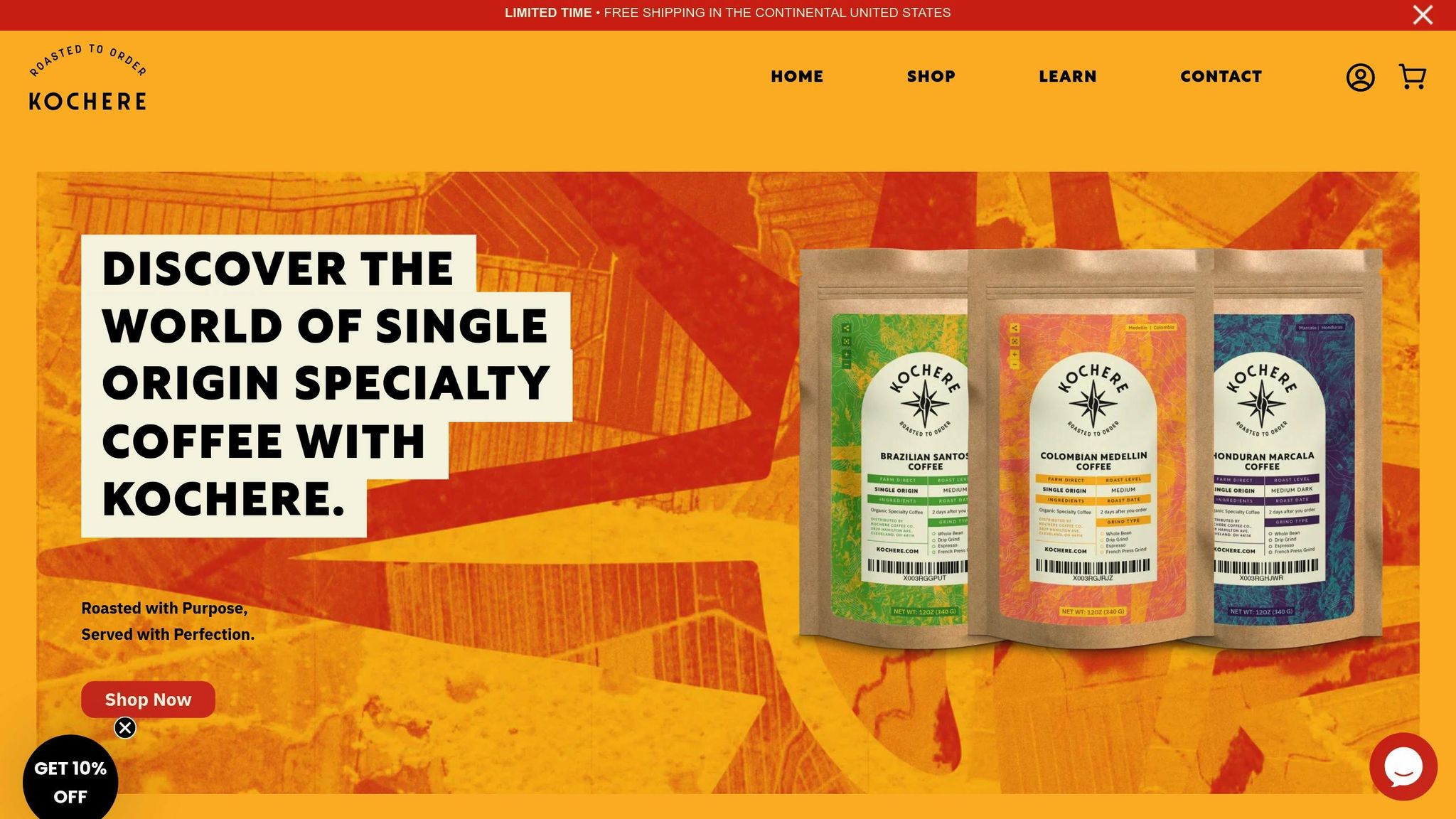
Choosing a single-origin coffee comes down to four label details: roast date, origin and region, tasting notes, and processing method. A little context about each goes a long way toward finding the cup you will love.
Reading Coffee Labels and Understanding Origins
Start with the roast date — at Kochere, every bag is roasted to order, so you begin with fresh beans. Next, read the origin and region: "Colombia" is a start, "Medellín" is a story; "Brazil" is broad, "Santos" gives you a clearer expectation of chocolate, cocoa, and almond. Then check the tasting notes, and finally the processing method — washed, natural, or honey — which is one of the biggest shapers of flavor. Two guides help here: Understanding Coffee Labels and Coffee Processing Methods (Washed, Natural, Honey). New to the whole category? Start with What Is Specialty Coffee? and our primer on How to Choose Coffee Beans.
Which Central or South American Coffee Should You Buy?
Match the origin to the cup you want: balanced and chocolatey (Colombia), bright and honeyed (Costa Rica), sweet and spicy (Honduras), or smooth and low-acid (Brazil). These four single origins are the easiest entry points.
MEDELLÍN · COLOMBIA
Colombian Medellín
Dried orange, berry, chocolate
ALAJUELA · COSTA RICA
Costa Rican Alajuela
Sweet apple, raisin, honey
MARCALA · HONDURAS
Honduran Marcala
Caramel, spice, brown sugar
SANTOS · BRAZIL
Brazilian Santos
Smooth cocoa, roasted almond, low acid
Want all four in one flight? The Kochere Single Origin Coffee Sampler pairs these Latin American origins with Ethiopian and Tanzanian lots so you can compare side by side, or browse the full Single Origin Coffee Collection and the broader Specialty Coffee Collection.
Brewing and Tasting Tips
Brewing is where origin comes alive. Costa Rican coffees like Alajuela shine in pour-over, where bright acidity and honeyed fruit unfold slowly. Colombian Medellín excels in a French press, where full immersion highlights caramel sweetness and chocolate body — see French Press and Aeropress. Brazilian Santos is a natural fit for espresso; for method matchups, read Pour Over vs. Espresso. Honduran Marcala is versatile as drip or AeroPress. Use filtered water at 195–205°F and grind just before brewing; Home Brewing Tips and Equipment and Types of Coffee Grinders and Grind Size Chart offer step-by-step help.

Frequently Asked Questions
What makes coffee from Colombia, Costa Rica, Honduras, and Brazil unique?
These four origins share a latitude but tell different stories in the cup, shaped by altitude, microclimate, soil, and processing. Colombia is balanced with gentle acidity and chocolate, caramel, and fruit; Costa Rica is bright, citrusy, and fruit-forward with a clean finish; Honduras leans sweet, chocolatey, and spicy with rounded acidity; and Brazil is smooth and low-acid with cocoa and nutty sweetness.
Which Central or South American coffee is the smoothest and least acidic?
Brazil produces the smoothest, lowest-acid Latin American coffee — Brazilian Santos is a textbook example, with cocoa and roasted-almond notes and a syrupy body ideal for espresso and milk drinks. Colombian Medellín is the next-smoothest choice, adding a touch more brightness while keeping a mellow chocolate-caramel core.
Which of these origins is best for nutty, chocolatey flavor?
Brazil is the go-to for nutty, chocolatey coffee, offering roasted almond, cocoa, and caramel in lots like Brazilian Santos. Colombian Medellín is a close second with chocolate and sweet caramel, while Honduran Marcala adds brown sugar and spice.
How do growing conditions and processing methods shape the flavor?
High elevations, stable temperatures, and nutrient-rich volcanic or clay soils give these coffees clarity and sweetness, and slower-growing high-altitude trees produce denser, more complex beans. Washed coffees (common in Colombia and parts of Costa Rica and Honduras) taste clean and crisp, while natural and honey-processed coffees (more common in Brazil and regional micro-lots) highlight bolder fruit and fuller body. See Coffee Processing Methods (Washed, Natural, Honey) for the full breakdown.
Colombia vs. Brazil — which should I choose?
Choose Colombian Medellín for a balanced, versatile everyday cup with dried orange, berry, and chocolate that suits drip and French press. Choose Brazilian Santos for a smoother, lower-acid cup with cocoa and nut notes that excels in espresso and milk-based drinks.
Why is single-origin coffee from these countries a great choice?
Single-origin coffee lets you taste a specific place, not just "coffee" in general — beans come from one defined region, so terroir, altitude, and processing are traceable and transparent. That means a direct connection to growers, repeatable flavor experiences, and a clearer sense of what you enjoy. The Kochere Single Origin Coffee Sampler is a simple way to taste how each origin expresses itself.

Map Your Next Coffee Origin Adventure
Taste the poise of Colombia, the brightness of Costa Rica, the sweetness of Honduras, and the comfort of Brazil — roasted to order, single-origin, and clearly labeled so you always know what is in the bag.
Shop the Single Origin Sampler →


)